
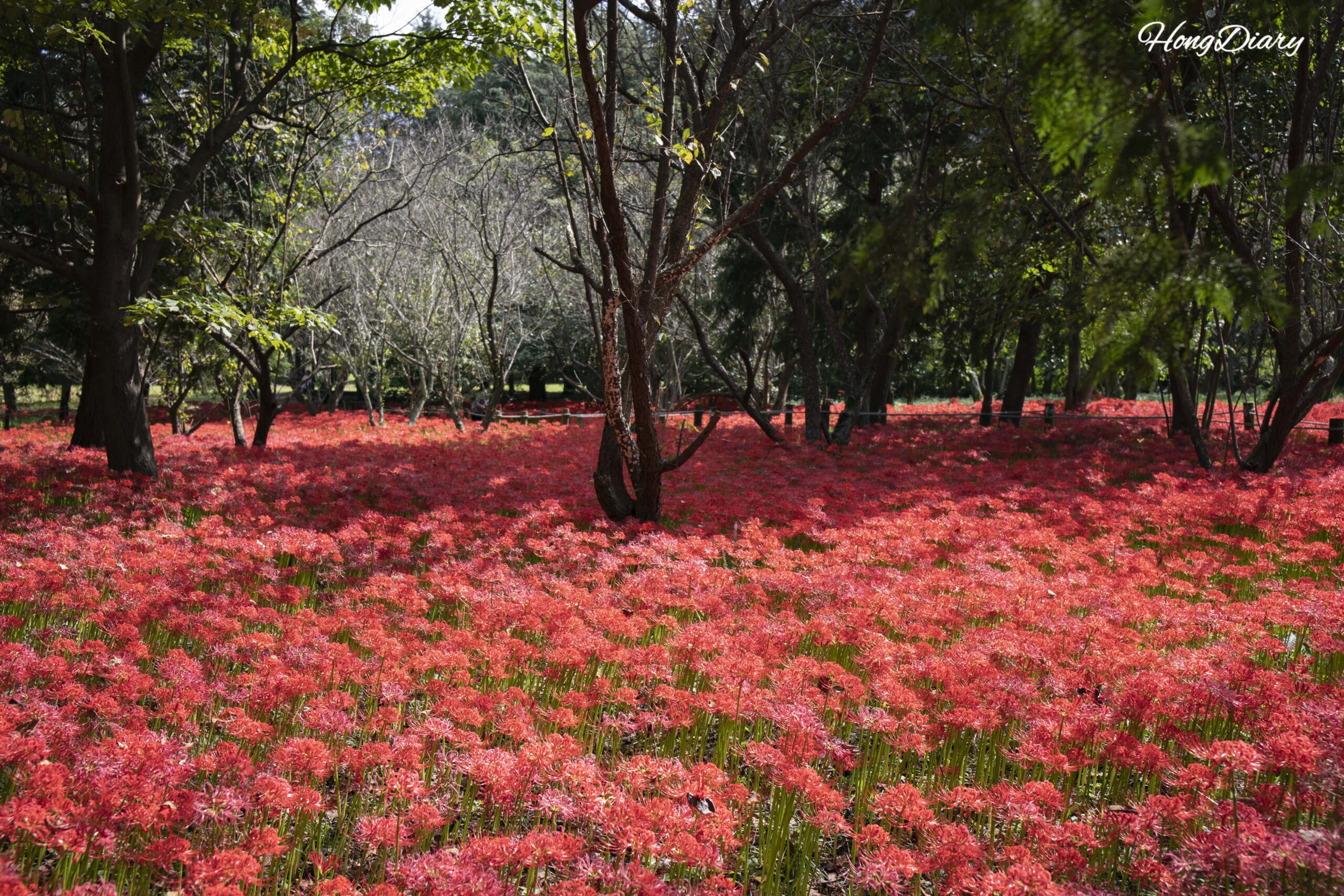
Everyone knows Naejangsan — one of South Korea’s most celebrated national parks — for maple leaves. The tunnels of red and gold in late October, the cable car over a blazing canopy, the crowds pouring in from Seoul for a single weekend of peak foliage — that’s the version of this national park that fills every autumn travel list in Korea. I went in mid-September, before any of that, and the Naejangsan red spider lily season was in full swing. What I found was a field of crimson blooms so vivid I spotted it from across the road, a lakeside walk I never planned, and a sculpture park I stumbled into by accident — all because I missed my bus stop.
Table of Contents
Naejangsan Arboretum Basic Info: Location, Red Spider Lily Season, and Transportation Guide
| Detail | Info |
|---|---|
| Location | Naejangsan Arboretum, 405-6 Ssangam-dong, Jeongeup-si, Jeollabuk-do |
| Admission | Free |
| Hours | Open year-round, no fixed closing time |
| Spider lily season | Early to mid-September (blooms last approximately 15 days) |
| Foliage season | Late October to early November |
| Getting there (bus) | From Jeongeup Express Bus Terminal or Jeongeup Station, take Bus 171 to the Songjuk stop, then walk 2 min (~200 m) |
| Getting there (taxi) | From Jeongeup city center: ~20 min / 10 km, ₩13,000–15,000 (~$9–11 USD / ~€8–10 EUR) |
| Getting there (KTX) | Yongsan Station (Seoul) to Jeongeup Station: approximately 2 hours 5 minutes, ₩34,900 (~$25 USD / ~€22 EUR) one way. Schedules and fares may change — check current availability before booking. |
| Bus frequency | Bus 171 runs only 1–2 times per day. Taxi is strongly recommended for both directions. |
Prices converted at approximately $1 USD ≈ ₩1,400 / €1 EUR ≈ ₩1,575 (as of September 2026). Rates may fluctuate.
Naejangsan National Park sits in Jeongeup, a small city in Jeollabuk-do (North Jeolla Province), about 250 kilometers south of Seoul. The park’s name translates loosely to “mountain of hidden treasures,” and it has held national park status since 1971. While the main temple area and cable car draw heavy traffic during foliage season, the western edge of the park — where the arboretum, sculpture park, and Naejang Lake sit — stays quiet year-round. In September, with red spider lilies in bloom across the arboretum floor, this side of the park felt like a version of Naejangsan that most travelers never encounter. Jeongeup itself has very little foreign tourism infrastructure, which is part of what makes it feel like a genuine countryside detour rather than a packaged day trip.
The Sculpture Park and a Deck Trail Above the Lake
I took Bus 171 from Jeongeup city center toward Naejangsan National Park. The bus doesn’t announce stops — no automated voice, no display — so I sailed right past the arboretum and ended up a couple of stops further than intended. On the bright side, the walk back followed a clean mountain road with almost no one on it, and the air at this altitude in September already carried that particular crispness that tells you summer is over.
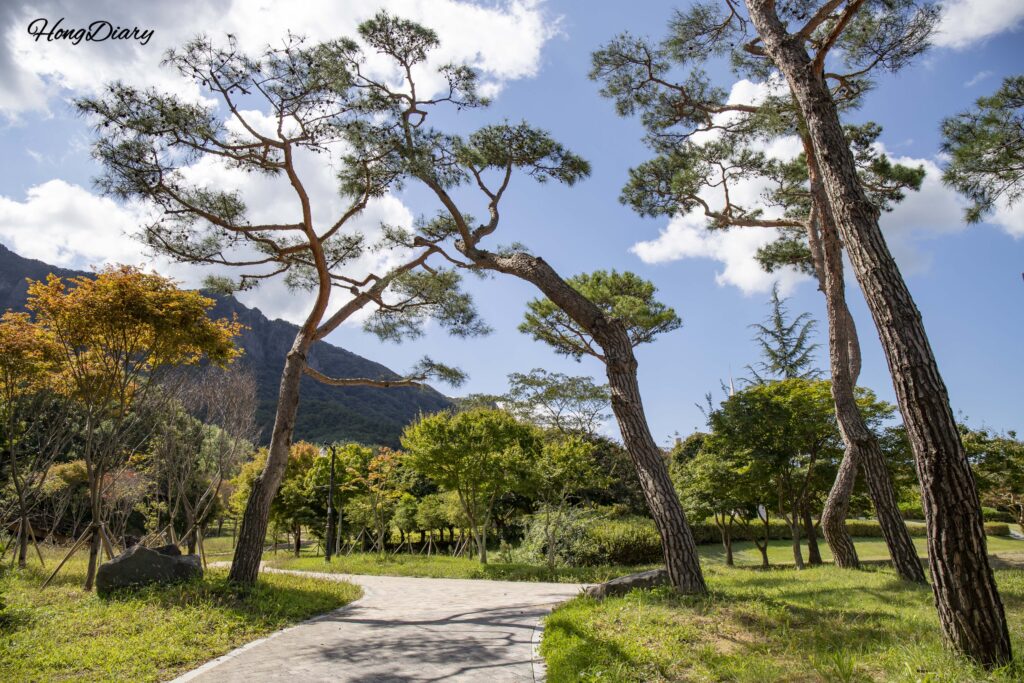
The arboretum sits directly across the road from Naejang Lake (also known as Naejang Reservoir), and right next to it, sharing the same grounds, is the Naejangsan Sculpture Park. I hadn’t planned to stop here, but the entrance was right there, and I had time to spare.
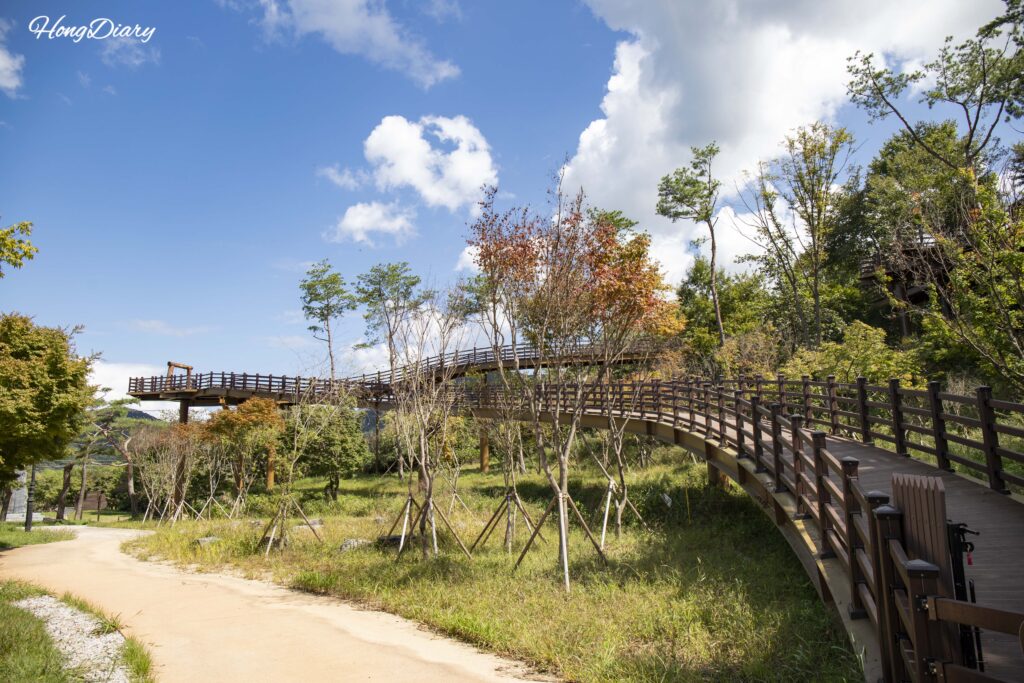
A raised wooden walkway — the Ecological Exploration Trail, a deck-style boardwalk built for nature observation — runs through the park, climbing gently to a viewpoint. From the top, the entire spread of Naejang Lake unfolded below: the water perfectly still, reflecting the surrounding ridgeline and the early hints of color in the trees. There were benches up there, and I used one. The shade was cool enough that I stopped sweating for the first time since getting off the bus.
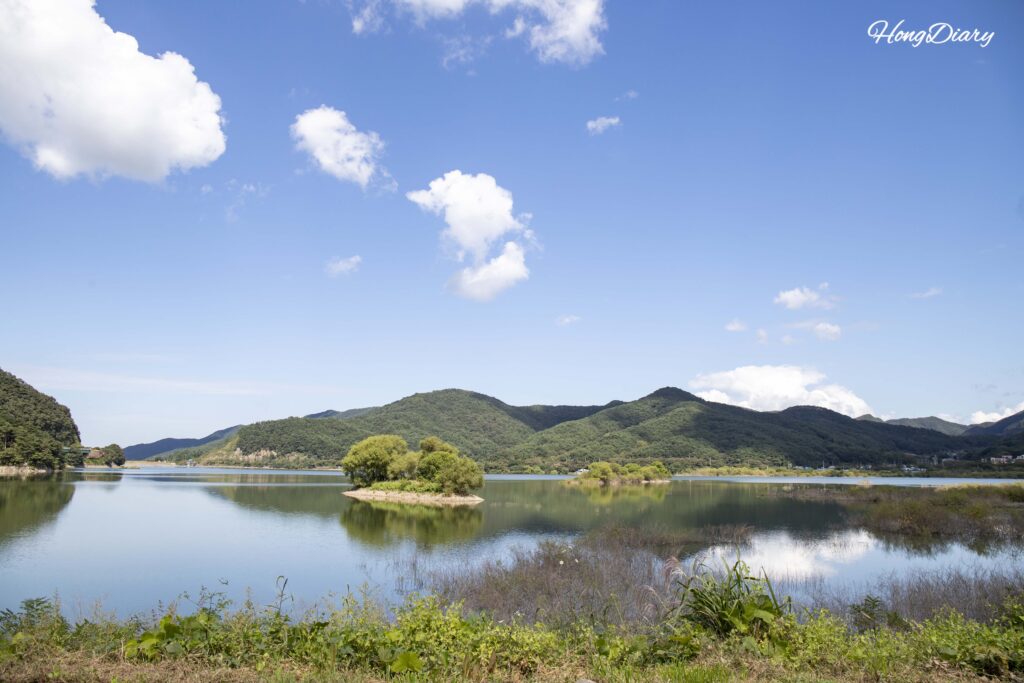
The temperature that day was a lesson in Korean early autumn: hot enough in direct sun to soak through my casual clothes (I hadn’t dressed for anything beyond a flat walk), but genuinely comfortable the moment I found shade. If you visit in September, layers help more than sunscreen.
The sculpture park displays works by 16 mid-career Korean sculptors, each with one piece in the collection — most of them selected from national art competitions. The grounds also host the annual Naejangsan Chrysanthemum Festival every October, so if you time a visit for late October or early November, you can catch both the chrysanthemums and the maple foliage in a single trip.
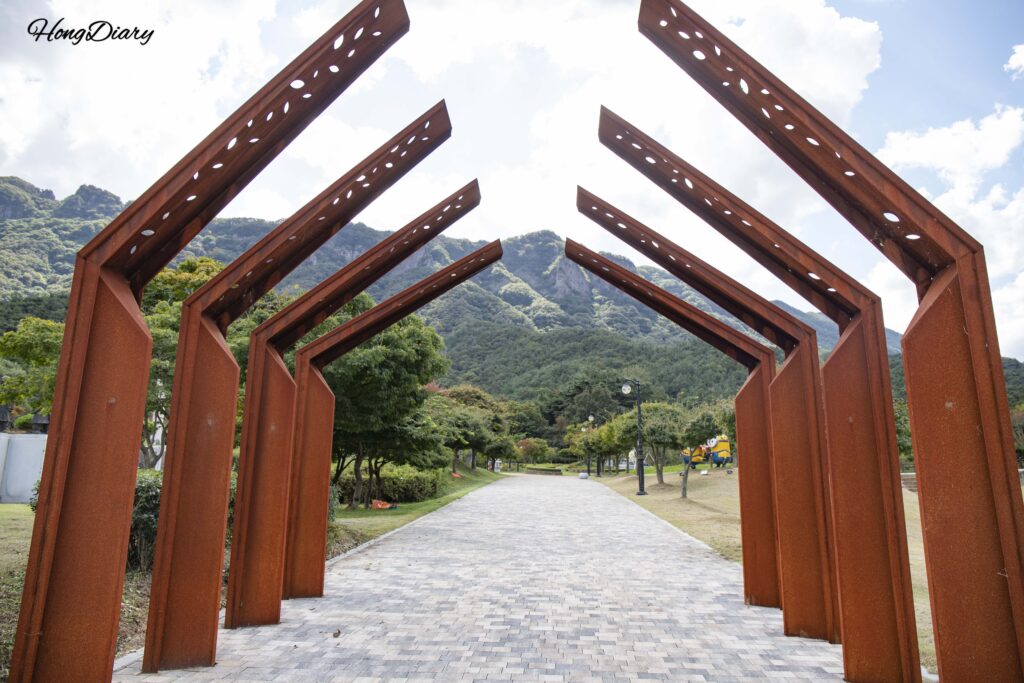
Small clusters of red spider lilies were already blooming among the sculptures — not nearly as dense as what waited at the arboretum, but enough to confirm that the timing was right.
Inside Naejangsan Arboretum — Red Spider Lilies in Full Bloom
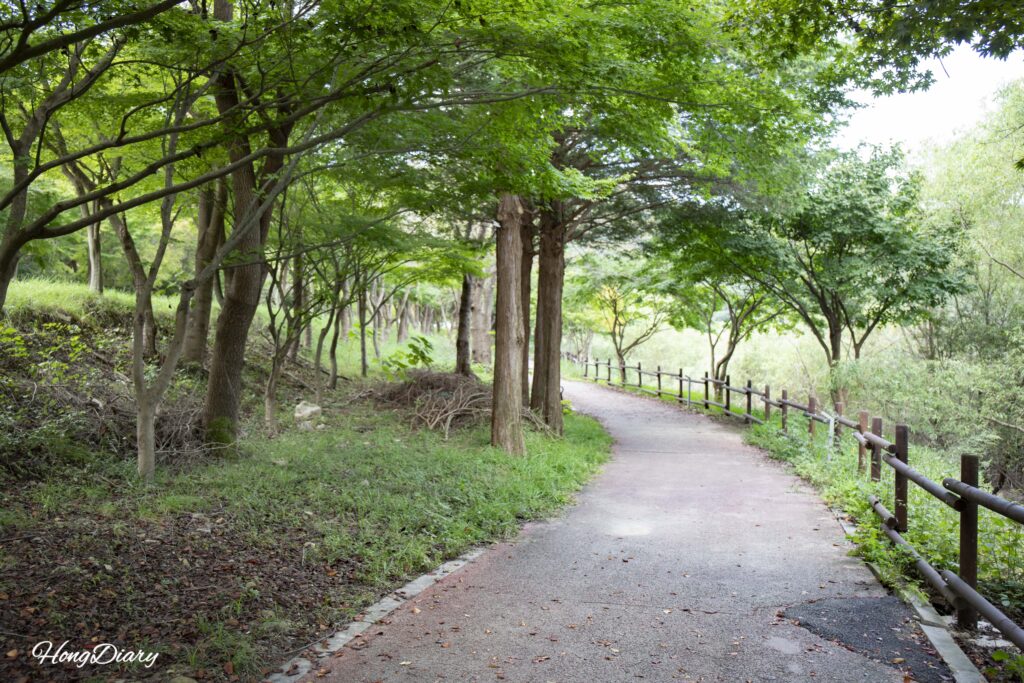
From the sculpture park, I crossed over to the arboretum next door. This is a privately operated botanical garden that preserves and displays a range of plant species through all four seasons — but in September, there is only one reason people come here.
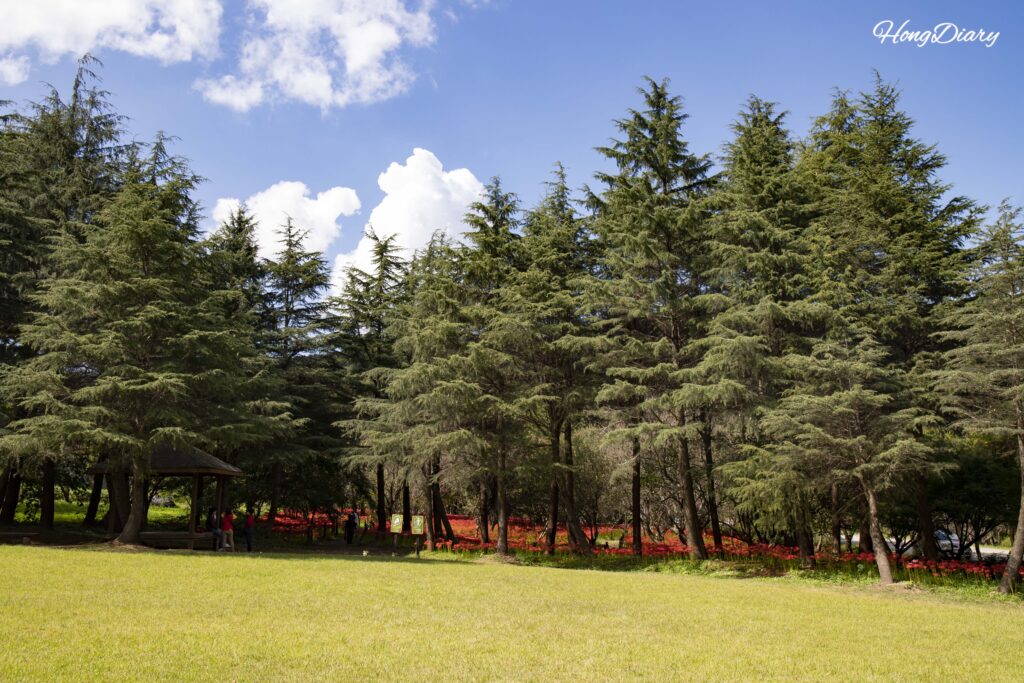
I could see it before I reached the entrance. A wash of red between the trees, unmistakable even from a distance. The main red spider lily colony at Naejangsan Arboretum spreads across a wide section of the grounds, and when I visited in the second week of September, the flowers were at full bloom.
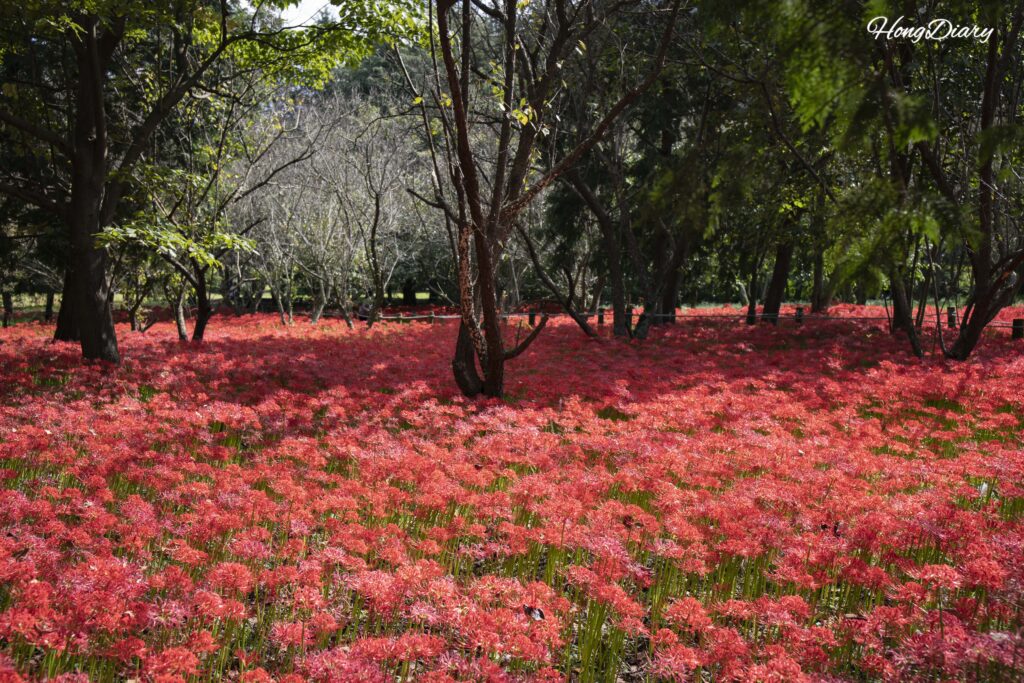
The paths through the flower beds are well-maintained — wooden walkways and packed-dirt trails that loop through and around the colony, letting you walk right alongside the blooms without stepping into the beds. Some visitors were ignoring the paths entirely, walking straight into the flower beds for photos. The flowers can’t protest, but it was hard to watch.
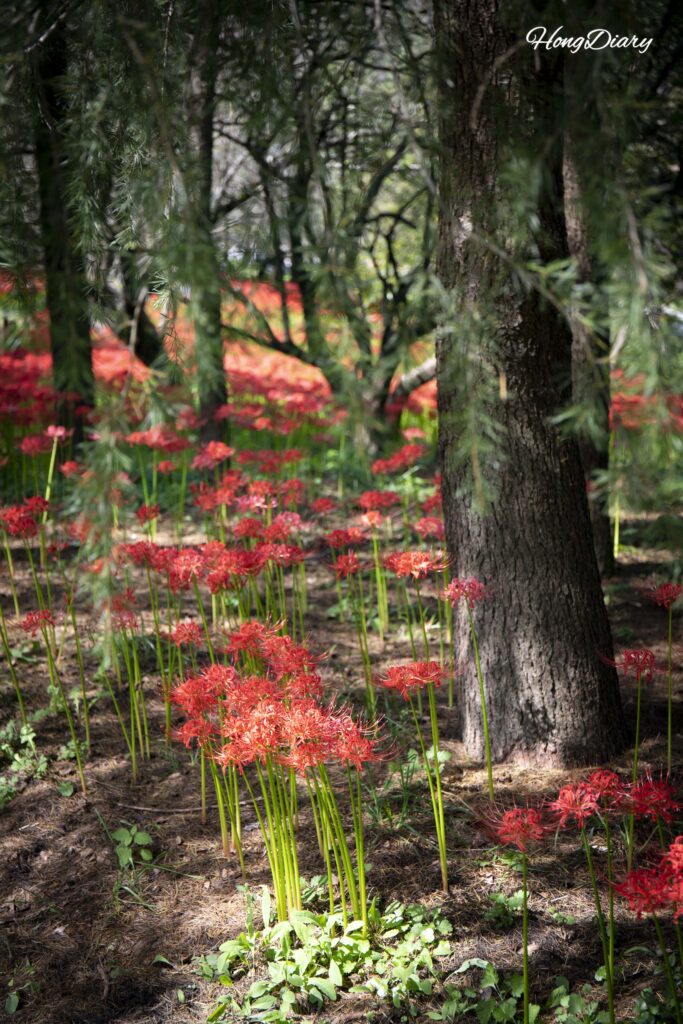
Last year, I missed the window. I arrived late and caught only the tail end of the season — faded petals, wilting stems, the unmistakable look of something already leaving. This time, arriving during the right week, the contrast was staggering. The red was so saturated it looked almost painted on. Each individual bloom lasts roughly two weeks from opening to falling, and because the entire colony follows a similar schedule, the window for seeing them at peak is narrow.
If you’ve encountered red spider lilies before — particularly in Japanese culture, where they’re known as higanbana and appear frequently near temples and in anime — you’ll know these flowers follow one of the strangest growth cycles in the plant world. The leaves emerge in spring, then vanish completely by summer. In early autumn, the flower stalks shoot straight up from bare ground and bloom without a single leaf present. When the flowers die and winter arrives, the leaves return. The flower and the leaf share the same root system but never coexist above ground. In Korean culture, this earned the red spider lily (Lycoris radiata, called kkotmureut in Korean) one of the most melancholic meanings in the country’s floral language: a symbol of love that can never be fulfilled, longing for someone you’ll never see again. I wrote in more detail about this — including why Buddhist monks historically planted them around wooden temple structures as a form of natural insect repellent — in my visit to Boseoksa Temple in Geumsan, another red spider lily site about three hours north of here where the flowers grow beside a 1,000-year-old ginkgo tree.
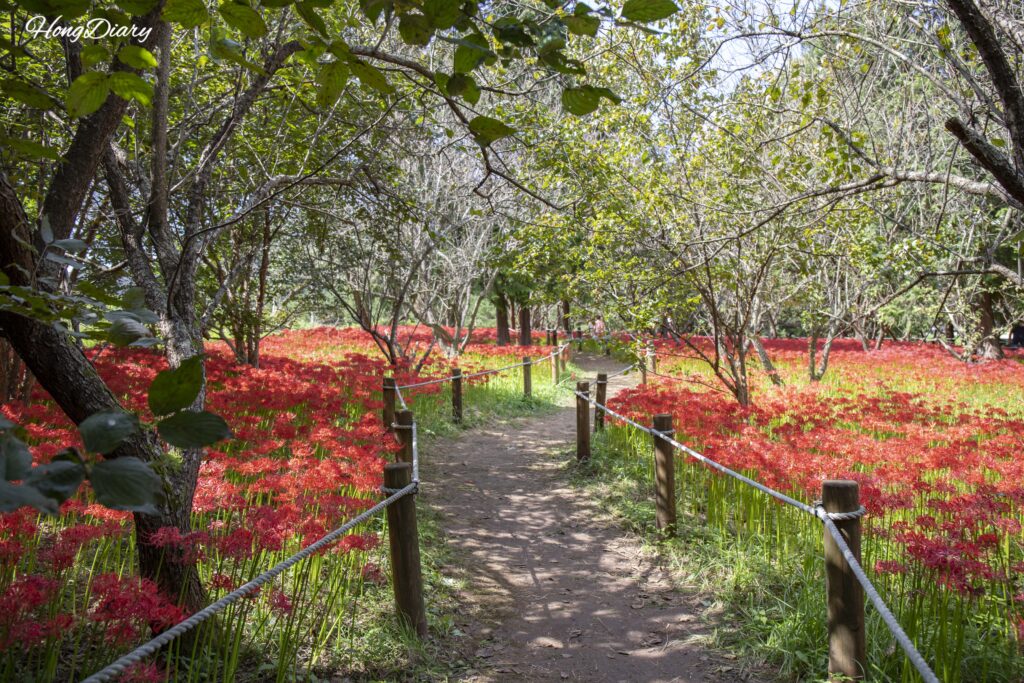
The colony here at Naejangsan Arboretum feels different from temple sites. It isn’t tucked behind a mountain or gated by stone steps — it’s right at ground level, next to a lake, reachable without a hike. If places like Boseoksa offer the quiet, earned version of the experience, this one is immediate and wide open.
Walking Back Along Naejang Lake
After the arboretum, I needed to get back to Jeongeup city center. This is where things got complicated.
I couldn’t find the return bus stop on the opposite side of the road. It simply didn’t seem to exist in the direction I needed. I waited for a while, paced around, checked my phone, and eventually decided to walk.
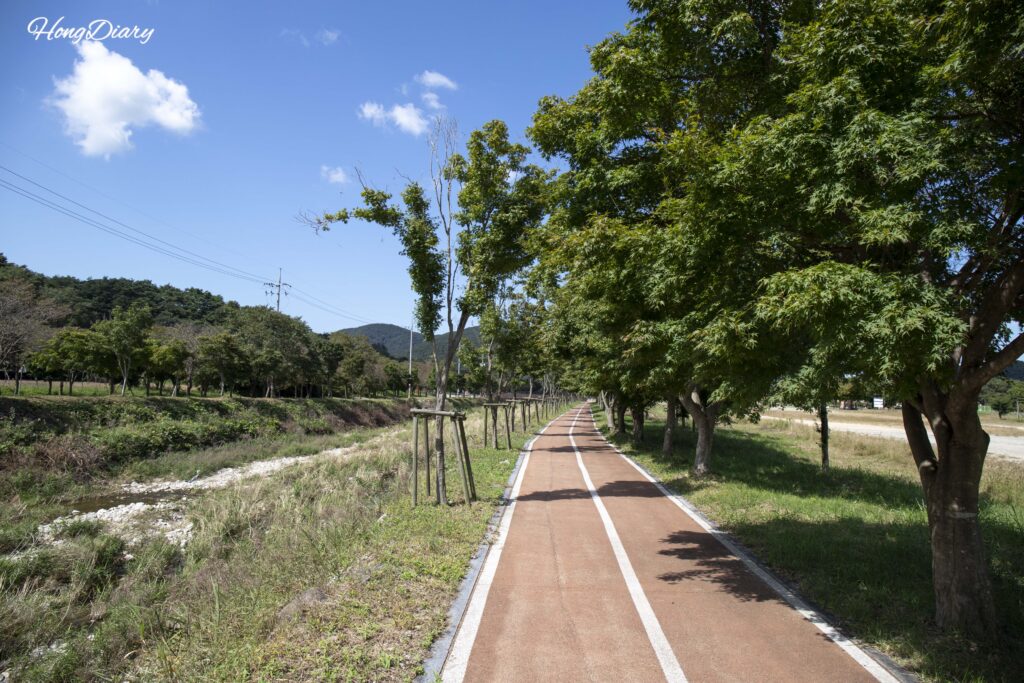
The lakeshore trail along Naejang Lake made that decision easy to live with. A paved and partially wooded path runs alongside the road, and for long stretches it felt more like a forest walk than a roadside slog. The lake stayed in view for most of the way, and the early autumn light was doing exactly what Korean countryside light does in September — making everything look still and faintly golden.
I walked for a long time. The plan was to flag down a taxi if I got tired, but I kept wanting to see what was around the next bend. Eventually, after realizing there was no city-bound bus stop for what felt like kilometers (bus stops on this route seem to exist only in the Naejangsan-bound direction), I reached the main park entrance area and called a taxi back.
I looked it up later: there’s apparently a bus stop about 2 km from the arboretum, near a place called Seondo-dongsan, that runs a return service to Jeongeup. But even that bus runs on an extremely infrequent schedule. For anyone visiting without a car, a taxi in both directions — ₩13,000–15,000 (~$9–11 USD / ~€8–10 EUR) each way — is the most realistic option.
When to Visit and What to Expect
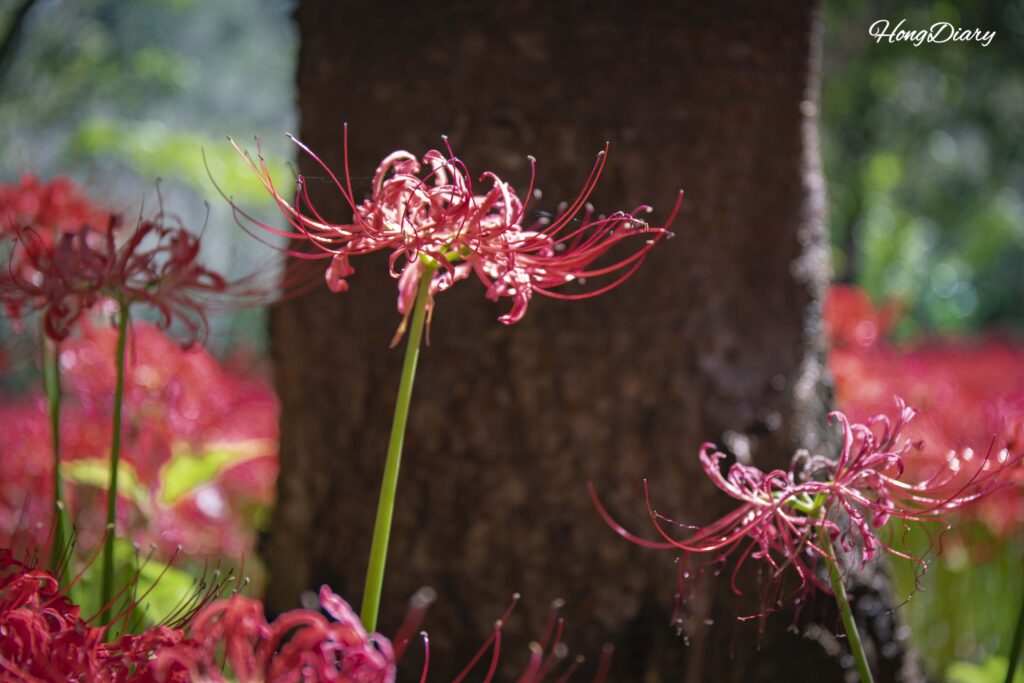
The red spider lily season at Naejangsan Arboretum runs from early to mid-September. The flowers I saw were at full bloom during the second week of September, which means arriving in the first or second week gives you the best chance of catching the peak. By late September, you’ll likely see fading blooms or bare stems. The entire cycle from first bloom to last petal is roughly 15 days, so checking recent visitor reports or local social media posts before your trip is worth the effort.
If you’re arriving by public transit from Seoul, the most common route is the KTX (Korea’s high-speed train) from Yongsan Station to Jeongeup Station — approximately 2 hours and 5 minutes, ₩34,900 (~$25 USD / ~€22 EUR) one way. Schedules and fares may change, so check current availability before booking. From Jeongeup Station, take a taxi to the arboretum. The combined cost of round-trip taxis from Jeongeup to the arboretum is ₩26,000–30,000 (~$19–21 USD / ~€17–19 EUR) — not cheap, but manageable for a half-day trip, and it eliminates the bus scheduling headache entirely.
The arboretum and sculpture park are both free to enter. No tickets, no gates. You can show up whenever you want and stay as long as you like.
A few other spots within walking distance of the arboretum are worth knowing about: the Maple Foliage Eco Park and the Naejangsan Tourism Theme Park both sit nearby and offer different seasonal draws. If you’ve made the taxi trip from Jeongeup, combining two or three of these makes the fare feel more justified.
This trip was part of a longer autumn route through Korea’s smaller cities — the kind of places that don’t show up on most foreign-language travel lists but carry some of the strongest seasonal scenery in the country.
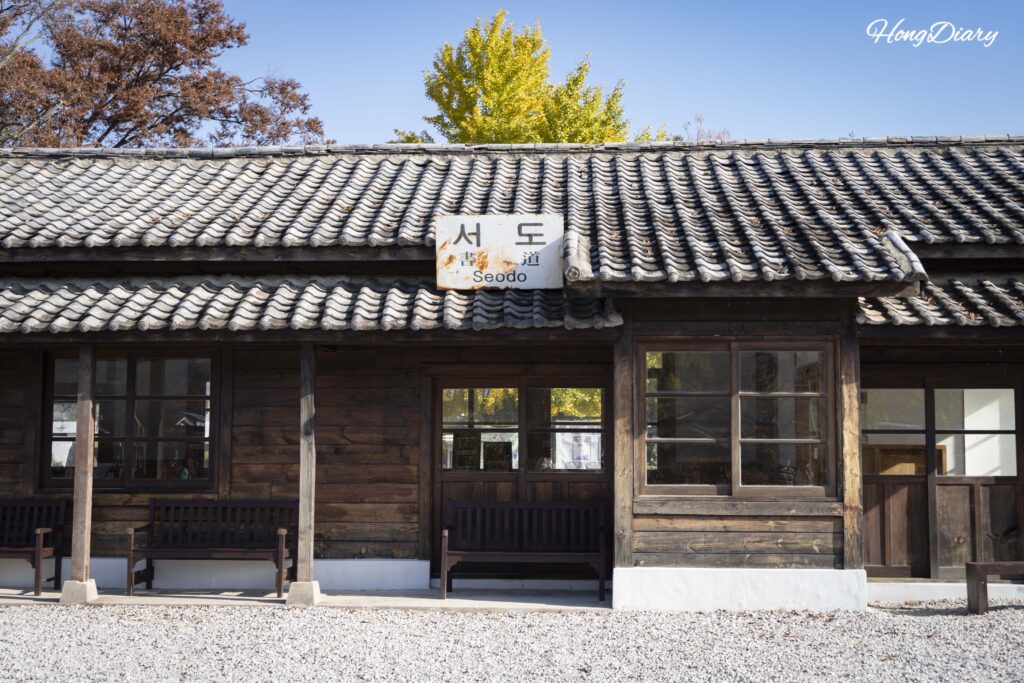
Before Jeongeup, I stopped in Namwon to visit the old Seodo Station, a 1932 wooden railway that appeared in Mr. Sunshine, a Korean television series available on Netflix — a small, photogenic structure surrounded by autumn color that most travelers outside Korea have never heard of.
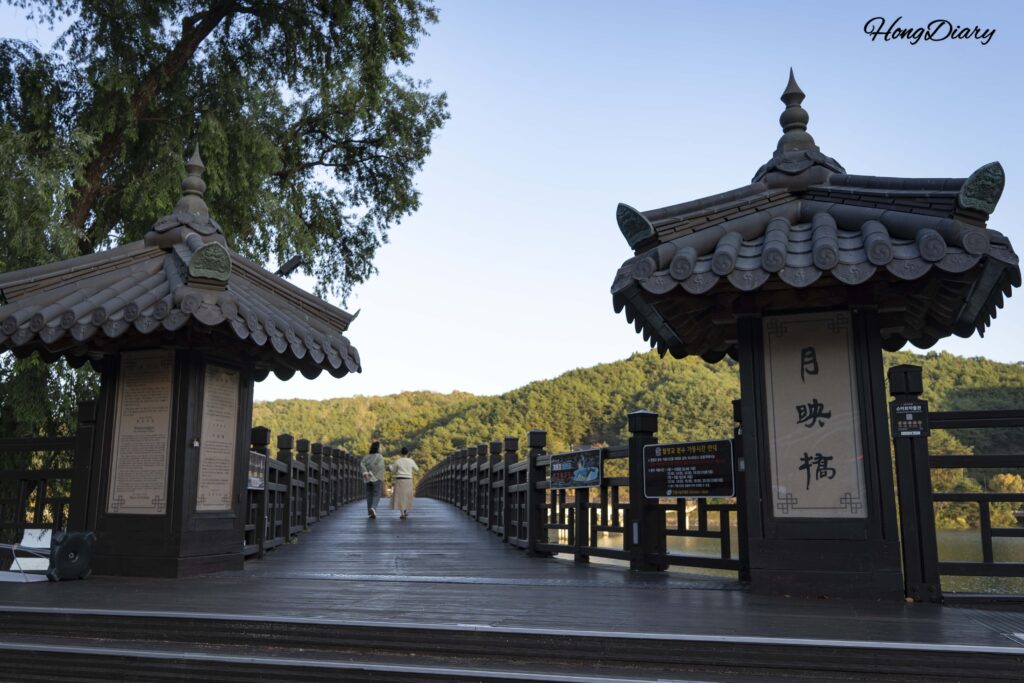
Further into the trip, I spent time in Andong — walking across Woryeonggyo Bridge at sunset, Korea’s longest wooden footbridge built around a 16th-century love story,
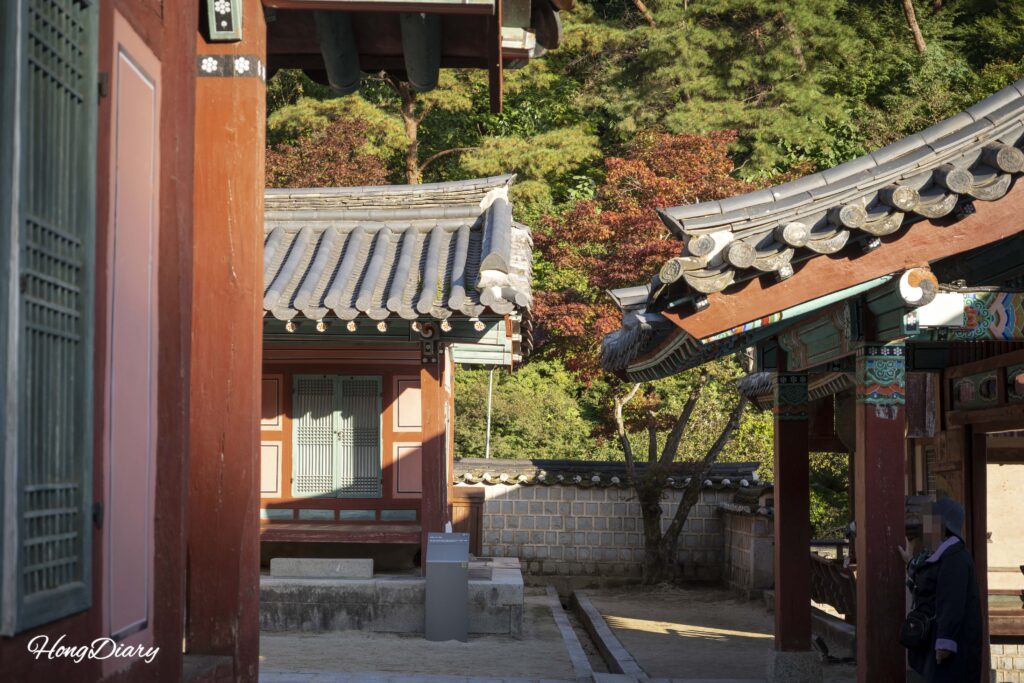
and visiting Dosan Seowon, the Confucian academy featured on Korea’s ₩1,000 banknote (about $0.70 USD — the equivalent of being on a country’s most common bill) that looks particularly striking when the surrounding hillside turns orange.
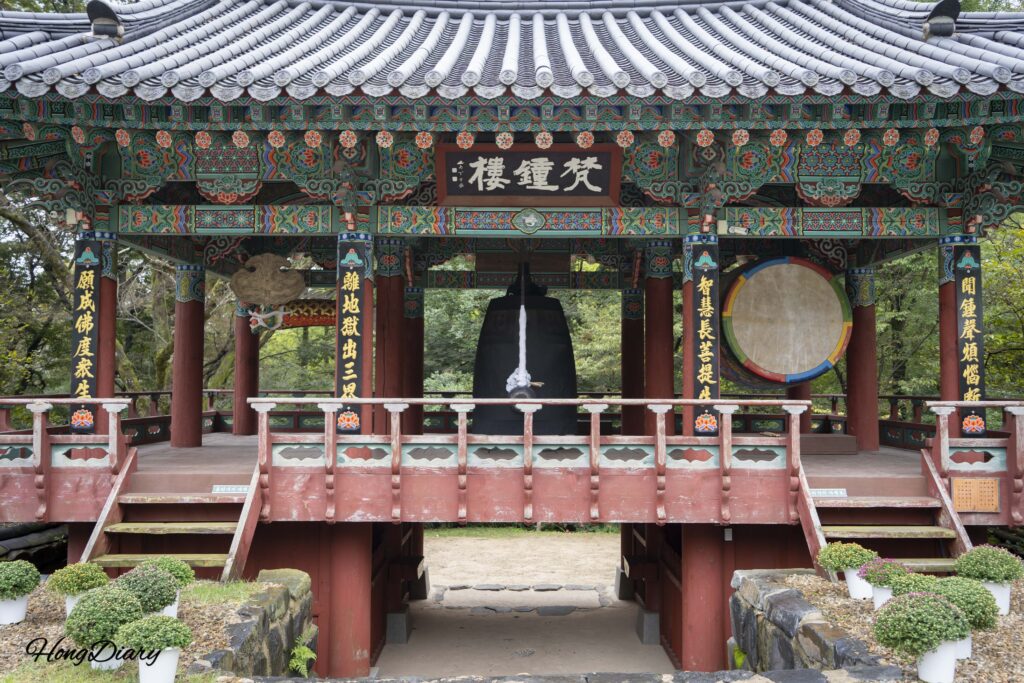
If you’re specifically chasing red spider lilies at other locations, Boseoksa Temple in Geumsan has a colony set against a ginkgo tree estimated at over 1,000 years old — a different atmosphere, the same flower, the same narrow blooming window.
I ended up walking far more than I expected at Naejangsan. The missed bus stop, the unplanned lakeshore trail, the extra loop through the sculpture park — none of it was scheduled. But the air was clean, the lake was still, and the Naejangsan red spider lily fields weren’t going to wait for me to come back the following week. Sometimes the best version of a trip is the one you didn’t plan.
Naejangsan Red Spider Lily FAQ & Practical Tips: How to Visit Without a Car and Best Time to Go
When is the best time to see red spider lilies at Naejangsan Arboretum?
The red spider lilies at Naejangsan Arboretum typically reach full bloom during the first and second weeks of September. The entire flowering cycle lasts approximately 15 days from first bloom to the last petals dropping, so the viewing window is narrow. Arriving in early to mid-September gives you the strongest chance of catching the peak. By late September, most of the flowers will have faded. This is a separate season from the famous autumn maple foliage at Naejangsan, which peaks in late October to early November.
How much does it cost to visit Naejangsan Arboretum and the Sculpture Park?
Both Naejangsan Arboretum and the adjacent Sculpture Park are completely free to enter. There are no tickets, no gates, and no fixed closing hours — the grounds are open year-round. The main cost of visiting is transportation: a taxi from Jeongeup city center to the arboretum runs ₩13,000–15,000 (~$9–11 USD / ~€8–10 EUR) each way, and since Bus 171 operates only 1–2 times per day, most visitors will need taxis in both directions, bringing the round-trip transport cost to approximately ₩26,000–30,000 (~$19–21 USD / ~€17–19 EUR).
Prices converted at approximately $1 USD ≈ ₩1,400 / €1 EUR ≈ ₩1,575 (as of September 2026). Rates may fluctuate.
How do I get to Naejangsan Arboretum from Seoul without a car?
The most practical route is to take the KTX (Korea’s high-speed train) from Yongsan Station in Seoul to Jeongeup Station, which takes approximately 2 hours and 5 minutes and costs ₩34,900 (~$25 USD / ~€22 EUR) one way. Schedules and fares may change, so check current availability before booking. From Jeongeup Station, take a taxi to the arboretum (approximately 10 km, 20 minutes, ₩13,000–15,000 / ~$9–11 USD / ~€8–10 EUR). There is a local bus (Bus 171) that stops at Songjuk, a 2-minute walk from the arboretum, but it runs only once or twice per day and does not announce stops. Taxi is strongly recommended for both legs of the trip.
What are red spider lilies, and why are they significant in Korean culture?
Red spider lilies (Lycoris radiata), called kkotmureut in Korean, are autumn-blooming flowers known for their unusual life cycle: the leaves grow in spring and vanish by summer, and the flowers then emerge from bare ground in early autumn with no leaves present. The flower and the leaf share the same root system but never coexist above ground. This pattern earned the plant one of the most melancholic meanings in Korean floral language — it symbolizes love that can never be fulfilled and longing for someone you will never see again. The roots contain a natural toxin that repels insects, which is why Buddhist monks historically planted them around wooden temple structures as a form of preservation. Today, dense red spider lily colonies are found near temples and in arboretums across southern Korea.
Is Naejangsan Arboretum the same place as Naejangsa Temple and the cable car area?
No. Naejangsan Arboretum and the adjacent Sculpture Park sit on the western edge of Naejangsan National Park, near Naejang Lake. Naejangsa Temple and the cable car are located deeper inside the park, roughly an hour’s walk further in. The arboretum area is much quieter and less visited than the temple and cable car zone, especially during autumn foliage season. The red spider lily colony is at the arboretum, not near the temple. If you want to visit both, plan for a full day or separate trips.
Can I see both red spider lilies and autumn foliage at Naejangsan in the same visit?
It is unlikely, because the two seasons do not overlap. Red spider lilies at Naejangsan Arboretum bloom in early to mid-September and last about 15 days. The autumn maple foliage at Naejangsan peaks in late October to early November. There is roughly a four-to-six-week gap between the end of the spider lily season and the start of peak foliage. If you want to experience both, you would need to visit twice. September offers the spider lilies and a quieter park with fewer visitors; late October and November offer the iconic maple tunnel and cable car views but with significantly larger crowds.
What else can I do near Naejangsan Arboretum during the same trip?
Within walking distance of the arboretum, you can visit the Naejangsan Sculpture Park (free, open year-round, featuring works by 16 Korean sculptors), the Maple Foliage Eco Park, and the Naejangsan Tourism Theme Park. The lakeshore trail along Naejang Lake is also a scenic walk. If you are planning a broader autumn trip through Korea’s smaller cities, the arboretum pairs well with other seasonal destinations in the region: the old Seodo Station in Namwon (a 1932 wooden railway featured in Mr. Sunshine, a Korean television series available on Netflix), Boseoksa Temple in Geumsan (another red spider lily colony near a 1,000-year-old ginkgo tree), and Dosan Seowon and Woryeonggyo Bridge in Andong.